
What a Skipped Fall Check-Up Actually Costs You
Put this off until January and you're not looking at a quick fix anymore. A torsion spring that was already fatigued from summer humidity can snap on the first morning it drops below 20 degrees, leaving a 150-plus-pound door stuck wherever it happens to be. A weatherstrip that's been cracking since August will let meltwater and road salt track straight into your garage all winter, rusting tracks and hardware from the inside out. And an opener that's been struggling quietly for months can simply refuse to work on the one day you need to get the car out before a storm. None of these are dramatic failures until they are, and by then you're paying for an emergency call instead of a routine one.
Why This Stretch of Illinois Is Hard on Garage Doors
The west suburbs don't just get cold, they get the full swing: humid summers that leave moisture in wood and rubber components, followed by hard freezes that make everything brittle. Add road salt tracked in on tires and boots, and you've got a recipe for rust on springs, tracks, and bottom brackets. Steel contracts in the cold, which is exactly when a spring under tension is most likely to fail. None of this is unique to any one block or neighborhood here, it's just what an Illinois garage door deals with every year, and late fall is the window to get ahead of it before temperatures drop for good.
Check the Weatherstripping and Seals
Walk around the bottom seal and the seals along the sides and top of the door. If the rubber is cracked, flattened, or pulling away from the track, it won't block wind, snow, or salt spray once winter sets in. Replacement seal kits are inexpensive, usually in the $20 to $60 range, and swapping one out now is a lot more pleasant than doing it with bare hands in freezing wind.
Lubricate Before the Cold Sets In
Cold makes grease stiff and metal-on-metal contact noisy and inefficient. Before the first deep freeze:
- Apply a silicone-based or lithium garage door lubricant to rollers, hinges, and the track (avoid WD-40, which is a solvent, not a lubricant, and will attract grit).
- Check the springs for a light coat of lubricant as well, since dry springs work harder and wear faster in the cold.
- Wipe down the tracks first to remove summer dust and any salt residue from last winter that never got cleaned off.
Inspect the Springs Now, Not in January
Torsion springs are rated for a certain number of open-close cycles, and cold weather accelerates fatigue in a spring that's already near the end of its life. Look for visible gaps in the coils, rust, or a door that feels noticeably heavier or uneven when you lift it manually with the opener disconnected. Do not attempt to adjust or replace a torsion spring yourself — the tension stored in that coil can cause serious injury. If a spring looks questionable going into November, get it replaced before the season turns, not during an ice storm.
Test the Balance and the Auto-Reverse Safety Feature
Disconnect the opener and lift the door halfway by hand. It should stay in place on its own. If it drifts down or shoots up, the spring tension is off, and the opener is compensating by working harder than it should, which shortens its lifespan. Separately, test the auto-reverse safety feature by placing a block of wood in the door's path and closing it. It should stop and reverse on contact. Cold weather can affect sensor alignment and response time, so this is worth checking before, not after, the first snow.
Protect the Opener and Consider a Battery Backup
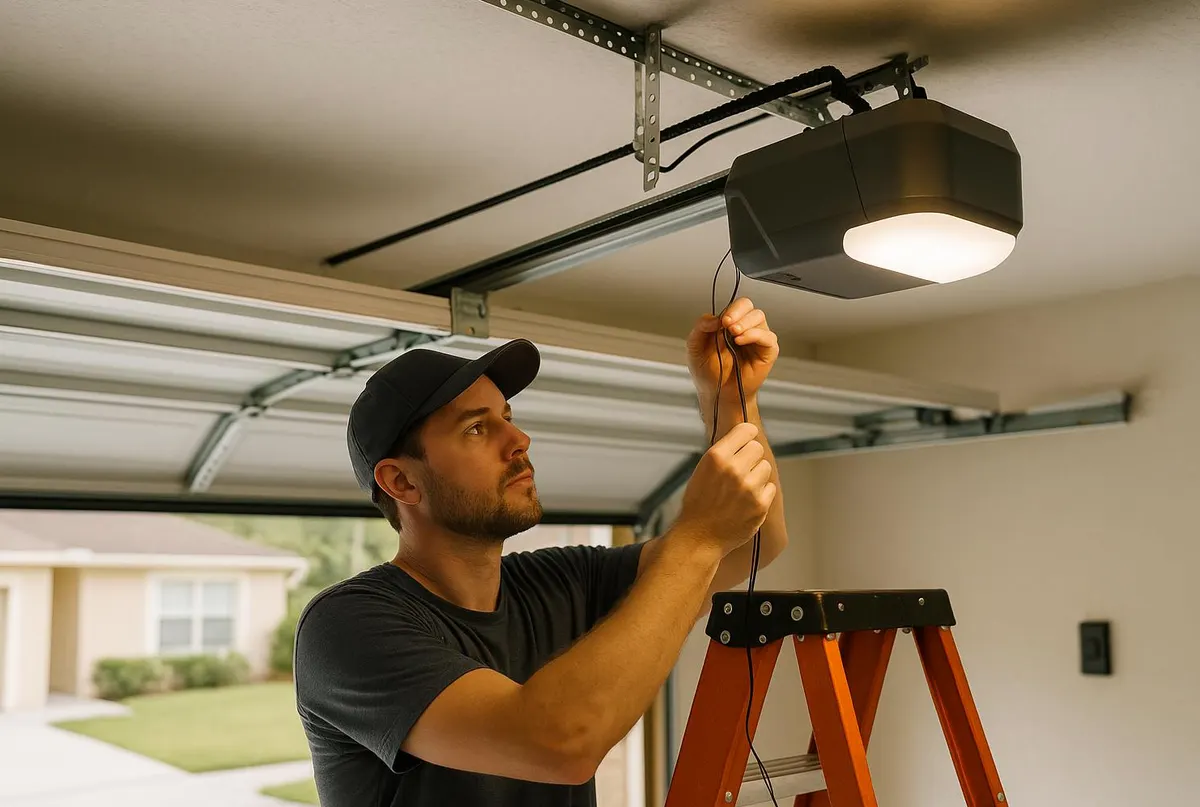
Belt-drive openers can stiffen slightly in extreme cold, and chain-drive units may need a tension check after a season of use. If your area is prone to winter power outages from ice-loaded lines, a battery backup for your opener means you're not stuck manually hauling the door open during a storm. This is also a good time to replace the remote batteries and confirm the keypad still works, since fumbling with a frozen keypad at 6am in January is nobody's idea of fun.
Don't Ignore the Garage Itself
If your garage is attached to the house, gaps around the door frame let cold air into a space that may share a wall with living areas. Weatherstripping along the frame, not just the door panel, helps control that. It also keeps blowing snow and salt spray out, which protects everything stored near the garage door, including your car's undercarriage.
When to Call Oak Park Garage Door
If you find a spring that looks worn, a door that won't balance correctly, or an opener that's struggling, that's the point to call in a professional rather than keep adjusting things yourself. Our Garage Door Maintenance visits cover a full inspection of springs, cables, rollers, and the opener before winter stress-tests all of it for you. If a spring is already showing wear, our Spring Replacement service gets it swapped out safely and correctly, with the right tension for your door's weight, so you're not dealing with a snapped spring on the coldest morning of the year.
If you're in Oak Park, River Forest, Forest Park, Berwyn, Elmwood Park, Maywood, Cicero, or Riverside and want your garage door checked before the deep freeze arrives, call Oak Park Garage Door today to schedule a pre-winter inspection.