
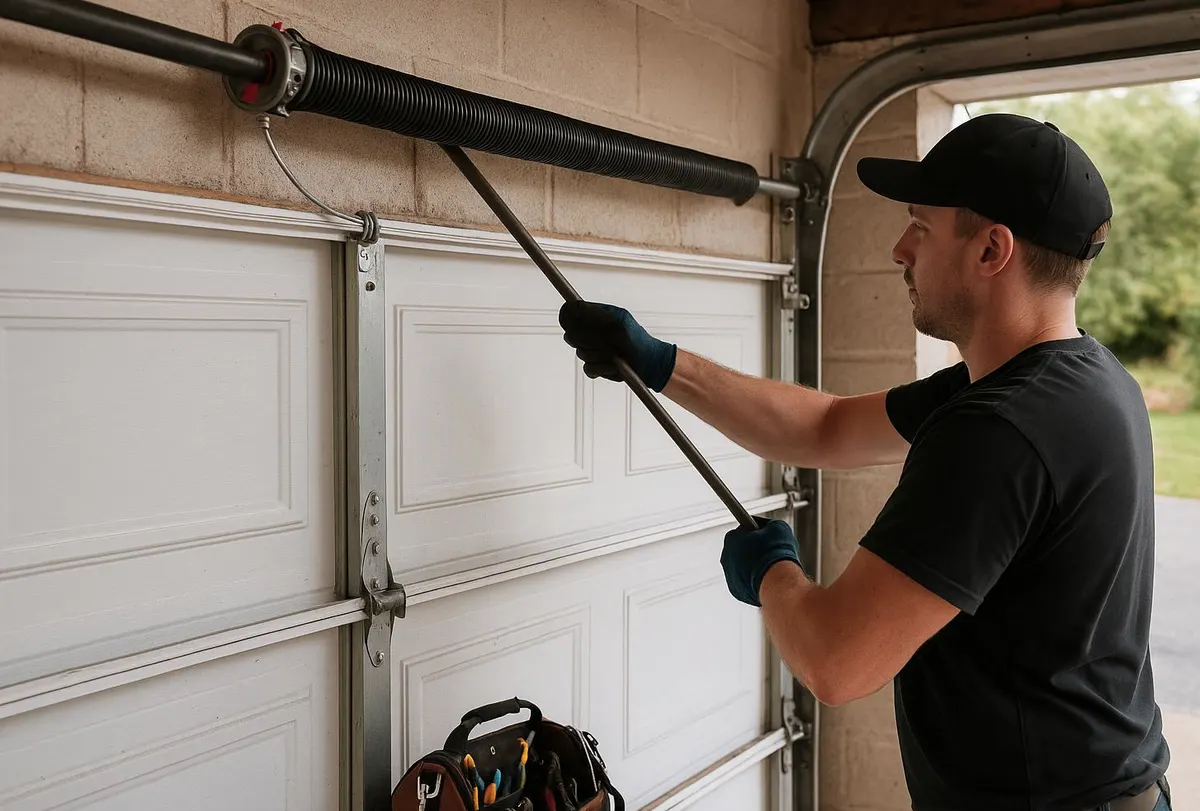
A Common Call We Get After a Storm
The pattern usually looks like this: the power goes out during a windstorm or an ice event, a homeowner needs to get the car out, and they remember there's a red cord hanging from the garage door opener. They pull it, the door comes free from the opener — and then either it won't budge, or it drops faster and harder than expected. By the time we get the call, there's sometimes a dented door panel, a pinched finger, or a door that's now stuck halfway and won't reconnect to the opener at all. None of this is rare. It happens every fall and winter when outages tied to wind and ice knock the opener offline right when someone needs the door most.
What the Emergency Release Actually Does
The cord with the red handle is connected to the trolley that rides inside the opener's rail. Pulling it disengages the trolley from the drive mechanism, which disconnects the door from the motor entirely. Once it's released, the door should move on manual strength alone, supported by the torsion or extension springs — not the opener. That's the whole point: it's a manual bypass for when the opener can't do its job.
When Pulling It Is the Right Call
- Power is out and you need to get a vehicle in or out before electricity is restored.
- The opener motor has failed or the trolley is jammed, and the door needs to move while you wait for repair.
- You're doing a balance check as part of routine maintenance, with the door closed and nobody near the opening.
When Pulling It Makes Things Worse
The release cord assumes the springs are doing their job of counterbalancing the door's weight. A properly balanced door, once disengaged, should lift with one hand and stay roughly in place when you let go. If a spring is broken, badly worn, or already losing tension — which happens more often than people expect after years of cold winters and seasonal expansion and contraction — there's nothing left to counterbalance a door that can weigh well over a hundred pounds. Pull the release in that situation and the door isn't going to ease down; it's going to drop. That's a crush risk for hands, feet, and anything parked underneath, and it's also how cars and door panels get damaged.
The other common mistake is pulling the cord while the door is already open and then trying to close it manually without realizing the spring tension has shifted. The door can suddenly reverse direction or slam shut with no warning.
The Specific Steps That Prevent a Bad Outcome
- Test the balance before you ever need the release in an emergency. With the door fully closed, pull the cord to disengage the opener, then lift the door manually about halfway. It should stay roughly where you put it. If it crashes down or flies up, the spring is out of balance and needs attention before you rely on manual operation.
- Only disengage the opener when the door is closed, if you can help it. This keeps spring tension at its lowest and limits how far anything can fall if something goes wrong.
- Know how to reconnect the trolley. After manually opening and closing the door, pull the cord toward the door (not straight down) to re-engage the carriage, then run the opener briefly to confirm it caught.
- Keep the release mechanism clear of ice and road salt buildup. Tracks and rollers near garage entries collect grime through a Chicago-area winter, and a stiff or gritty release cord is harder to use correctly in the moment you need it.
- Keep the handle out of easy reach for small children and treat it as a tool, not a toy — an unexpected mid-air release with someone standing underneath is a real hazard.
When to Call Oak Park Garage Door
If your door doesn't hold position during a balance test, drops faster than it should, or the release cord won't reconnect the trolley cleanly, that's not a DIY fix — it means the spring system or the opener hardware needs a trained eye. We handle Spring Replacement for doors that are out of balance or showing uneven lift, and Garage Door Maintenance to catch worn springs, cables, and rollers before a storm-related power outage turns into an emergency. If you're already stuck with a door that's jammed open, closed, or half-disengaged, our Emergency Garage Door Service covers exactly that.
Before the first real ice storm of the season hits, get your door's balance checked. Call Oak Park Garage Door and we'll make sure the emergency release on your door is something you can actually trust when you need it.